

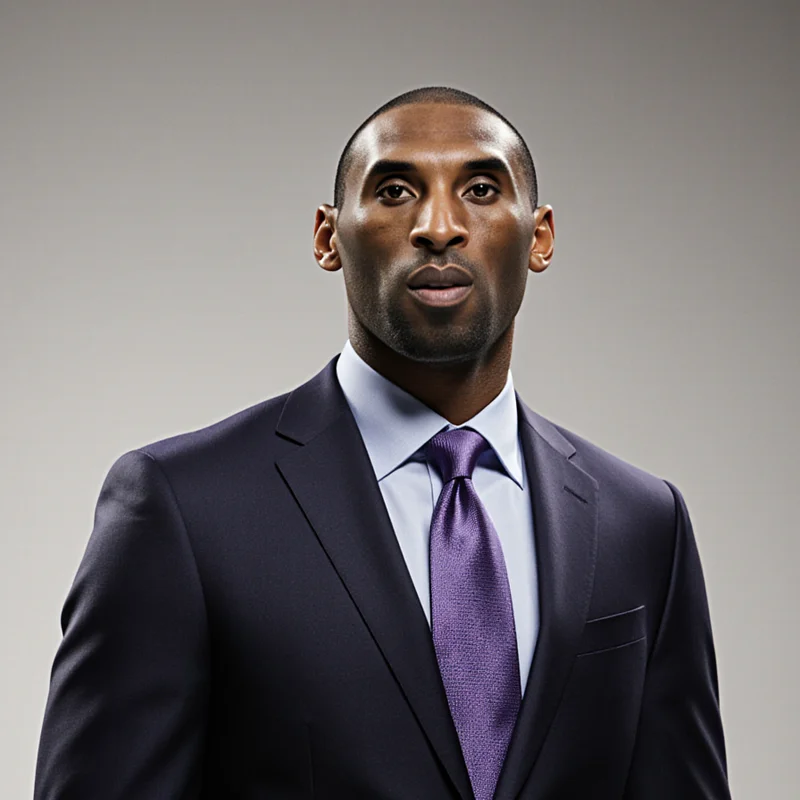
Kobe Bryant was a legendary NBA shooting guard for the Los Angeles Lakers, widely regarded as one of the greatest basketball players of all time. Known for his exceptional work ethic, competitive drive, and 'Mamba Mentality,' he maintained an intense daily training regimen that contributed to his 20-year career success. His disciplined approach to fitness, nutrition, and mental preparation became a model for professional athletes worldwide.
Quick Facts
Notable Wins
- 5-time NBA Champion
- 18-time NBA All-Star
- 2-time NBA Finals MVP
- 1-time NBA MVP
- 81-point game (second highest scoring performance in NBA history)
- Inducted into Basketball Hall of Fame
- Olympic gold medalist
Jump to Section
Transparency Notice: This article contains affiliate links to products and services we recommend. If you make a purchase through these links, we may earn a commission at no extra cost to you. This helps us keep our content free and continue providing valuable information. We only recommend products we've researched or personally used. For complete details, see our Affiliate Disclosure.
01
Morning Foundations: The 4 AM Awakening
Everything negative – pressure, challenges – is all an opportunity for me to rise.
Wake & Cold Exposure
Kobe's 4:00 AM wake time is non-negotiable, even on rest days. He avoids snooze buttons entirely, understanding that the first decision of the day sets momentum. Upon waking, he engages in 5–10 minutes of cold water exposure (cold shower or ice bath) to activate the parasympathetic nervous system and boost alertness without caffeine.
Cold Awakening Protocol
- Wake at 4:00 AM without snooze—no exceptions
- 5–10 minutes cold water exposure (cold shower or ice bath)
- Immediate movement: light stretching or walking to activate circulation
- Avoid caffeine for 60–90 minutes to preserve natural cortisol spike
- Hydrate with 16–20 oz water upon waking
"The most important thing is you have to care. And if you care, you'll do the work."
Everyday adaptation: Set a non-negotiable 4:00 AM alarm and commit to no snooze for one week. Start with a cold shower (30 seconds is enough) and drink water immediately—this costs nothing and builds discipline instantly.
Everything I do is for a purpose.
First Strength & Conditioning Session
The first 90-minute session (4:30–6:00 AM) is Kobe's most intense workout, combining strength training, plyometrics, and conditioning. This session typically includes compound lifts (squats, deadlifts, bench press), explosive movements (box jumps, medicine ball throws), and basketball-specific footwork drills. Training in a fasted or lightly fed state maximizes fat oxidation and mental clarity.
Strength & Conditioning Framework
- Compound lifts: Squats, deadlifts, bench press (8–12 reps, 4–5 sets)
- Plyometrics: Box jumps, lateral bounds, medicine ball throws (6–8 reps, 3–4 sets)
- Core work: Planks, rotational exercises, anti-rotation holds (3–4 sets)
- Conditioning: 10–15 minutes moderate-intensity cardio or circuit training
- Full recovery between sets: 2–3 minutes for heavy lifts
"Mamba Mentality is about focusing on the process and trusting the hard work."
Everyday adaptation: You don't need a 4:30 AM start—pick your earliest available hour and commit to 60 minutes of compound lifts and plyometrics three times per week. Focus on quality over volume.
The most important thing is you have to care.
Meditation & Breakfast Recovery
After the first workout, Kobe dedicates 10–15 minutes to meditation, focusing on breath work, visualization, and mental clarity. This practice reduces cortisol, enhances focus, and prepares him mentally for the day ahead. Immediately following meditation, he consumes a protein-rich breakfast within 30–45 minutes of finishing his workout to maximize muscle protein synthesis.
Post-Workout Recovery & Nutrition
- Meditation: 10–15 minutes of breath work and visualization
- Breakfast timing: Within 30–45 minutes of finishing workout
- Protein intake: 30–40g (eggs, lean meat, Greek yogurt)
- Carbohydrates: Oats, fruit, or whole-grain toast for glycogen replenishment
- Hydration: 16–20 oz water with electrolytes (check Instagram for Kobe's recovery tips)
"Meditation is not about clearing your mind—it's about focusing your mind on what matters."
Everyday adaptation: Sit quietly for 10 minutes after your morning workout, focusing on three deep breaths. Then eat a simple breakfast of eggs and toast within 45 minutes—this supports muscle recovery and mental clarity.
I have nothing in common with lazy people.
Basketball Skill Work & Technique Refinement
The 7:00–9:00 AM skill session is dedicated entirely to basketball fundamentals: shooting mechanics, footwork, ball handling, and game-situation drills. Kobe performs 500+ shots daily during this window, breaking them into segments (catch-and-shoot, off-the-dribble, contested, game-speed). This session emphasizes quality repetition over volume, with each rep executed with perfect form.
Basketball Skill Development Protocol
- Shooting: 300–400 shots across multiple spots (catch-and-shoot, pull-up, contested)
- Footwork drills: Pivot work, lateral movement, explosive first steps (20–30 minutes)
- Ball handling: Dribble drills, crossovers, change-of-pace work (15–20 minutes)
- Game-speed situations: Pick-and-roll, isolation, transition drills (20–30 minutes)
- Video review: Analyze technique using YouTube or film to refine mechanics
"Everything I do is for a purpose. I'm not just shooting—I'm building muscle memory."
Everyday adaptation: Dedicate 30 minutes to one skill (shooting, footwork, or ball handling) three times per week. Record yourself and review the footage—this builds awareness and accelerates improvement without needing a coach.
02
Midday Nutrition & Hydration Strategy
Take care of your body. It's the only place you have to live.
Mid-Morning Snack & Hydration
Between the skill work session and afternoon training, Kobe consumes a light snack every 2 hours to maintain stable blood sugar and energy. This mid-morning snack typically includes lean protein (fish, chicken, or turkey), fresh fruit, and vegetables in small portions. Hydration is equally critical—he drinks 16–20 oz water with electrolytes to replace sweat loss from the morning sessions.
Snacking & Hydration Framework
- Protein source: Grilled chicken, fish, or lean turkey (3–4 oz)
- Carbohydrate: Apple, banana, or berries for quick energy
- Vegetables: Steamed broccoli, carrots, or leafy greens
- Hydration: 16–20 oz water with electrolytes every 2 hours
- Timing: Snack within 2 hours of previous meal to maintain steady energy
"Hydration is not optional—it's the foundation of performance."
Everyday adaptation: Pack a simple snack box with grilled chicken, fruit, and veggies. Drink a large glass of water every two hours—this prevents energy crashes and keeps you focused throughout the day.
Nutrition is not a luxury—it's a requirement for excellence.
Lunch: Protein-Forward Meal
Kobe's lunch is his largest meal, designed to replenish glycogen stores and provide sustained energy for afternoon training. A typical lunch includes 6–8 oz lean protein (grilled fish, chicken breast, or turkey), complex carbohydrates (brown rice, sweet potato, or quinoa), and 2–3 servings of vegetables. This meal is consumed 2–3 hours before afternoon training to allow proper digestion while maintaining energy levels.
Lunch Nutrition Protocol
- Protein: 6–8 oz grilled fish, chicken, or lean turkey
- Complex carbs: Brown rice, sweet potato, or quinoa (1–1.5 cups cooked)
- Vegetables: Steamed broccoli, asparagus, or mixed greens (2–3 servings)
- Healthy fat: Olive oil or avocado for nutrient absorption
- Hydration: 20–24 oz water with electrolytes during meal
"Every meal is an investment in your performance."
Everyday adaptation: Meal prep one large lunch on Sunday: grill 2 lbs chicken, cook a batch of brown rice, and steam vegetables. Portion into containers and eat the same lunch daily—this removes decision fatigue and ensures consistent nutrition.
03
Afternoon Training: Two-Session Protocol
The most important thing is to focus on the process, not the outcome.
Second Basketball Skill Session
The 2:00–4:00 PM session mirrors the morning skill work but emphasizes game-speed situations and contested scenarios. Kobe performs 300–400 additional shots, focusing on high-pressure drills (defender closing out, time constraints, fatigue-based shooting). This session builds mental toughness and trains the body to execute under stress. Video analysis and technique refinement occur throughout.
Game-Speed Skill Development
- Contested shooting: 200+ shots with defender closing out
- Fatigue-based drills: Shooting after conditioning to simulate game conditions
- Pick-and-roll situations: 30–40 minutes of game-speed offensive sets
- Transition drills: Fast-break and secondary break scenarios
- Video review: Analyze performance using YouTube or coaching film
"You can't be afraid to fail. It's the only way you succeed."
Everyday adaptation: After your regular workout, spend 20 minutes on one contested skill (shooting with a defender, dribbling under pressure). This builds confidence and mental resilience in your primary discipline.
The pain of discipline weighs ounces while the pain of regret weighs tons.
Treadmill Running & Aerobic Conditioning
On non-game days, Kobe runs 5–6 miles on a treadmill at a steady, conversational pace (60–70% max heart rate). This session builds aerobic capacity, aids recovery between skill sessions, and provides mental clarity. The treadmill allows precise distance tracking and consistent conditions. Running is performed 4–5 hours after lunch to avoid digestive discomfort while maintaining energy for evening training.
Aerobic Conditioning Protocol
- Distance: 5–6 miles on treadmill
- Pace: Conversational (60–70% max heart rate, approximately 8–10 min/mile)
- Duration: 50–60 minutes
- Hydration: 20–24 oz water during run (sip every 10–15 minutes)
- Mental focus: Use running time for visualization or podcast learning
"Running is meditation in motion. It clears the mind and builds the body."
Everyday adaptation: Run or walk 3–4 miles three times per week at a conversational pace. Use this time to listen to podcasts, audiobooks, or simply think—this builds aerobic fitness and mental clarity without requiring a gym.
Flexibility is a sign of strength, not weakness.
Evening Skill Work & Stretching
The final training window (5:30–7:00 PM) combines light skill work (100–150 shots at 70–80% intensity) with 30–40 minutes of comprehensive stretching. This session prioritizes mobility, injury prevention, and parasympathetic activation before evening recovery. Stretching focuses on hip flexors, hamstrings, shoulders, and ankles—areas critical for basketball performance and injury prevention.
Evening Mobility & Stretching Protocol
- Light shooting: 100–150 shots at 70–80% intensity (technique focus)
- Dynamic stretching: Leg swings, arm circles, torso rotations (10 minutes)
- Static stretching: Hold each stretch 30–60 seconds (hip flexors, hamstrings, shoulders, calves)
- Foam rolling: 10–15 minutes on quads, IT band, calves, and back
- Breathing work: 5 minutes of deep, diaphragmatic breathing to activate parasympathetic nervous system
"Recovery is where the magic happens. Stretching is not optional."
Everyday adaptation: After your evening workout, spend 15 minutes stretching the areas you used most (legs if you ran, shoulders if you lifted). Hold each stretch for 30 seconds and breathe deeply—this prevents soreness and improves mobility.
04
Evening Recovery & Sleep Optimization
What you eat after training determines how you recover.
Dinner & Recovery Nutrition
Dinner is consumed 2–3 hours before bed and mirrors lunch in structure: 6–8 oz lean protein, complex carbohydrates, and 2–3 servings of vegetables. This meal supports muscle protein synthesis and replenishes glycogen depleted during four training sessions. Kobe emphasizes anti-inflammatory foods (fatty fish, leafy greens, berries) to accelerate recovery and reduce joint stress from high-volume training.
Recovery Dinner Framework
- Protein: 6–8 oz grilled salmon, chicken, or lean beef (omega-3 rich)
- Complex carbs: Brown rice, sweet potato, or whole-grain pasta (1–1.5 cups)
- Anti-inflammatory vegetables: Spinach, broccoli, bell peppers, or Brussels sprouts
- Healthy fat: Olive oil, avocado, or nuts for nutrient absorption
- Hydration: 16–20 oz water (avoid excess fluids 2 hours before bed)
"Dinner is not a reward—it's fuel for tomorrow's performance."
Everyday adaptation: Eat the same dinner structure nightly: grilled protein, a starch, and vegetables. This removes decision fatigue and ensures consistent recovery nutrition without requiring a personal chef.
Sleep is when your body builds champions.
Digital Wind-Down & Sleep Preparation
Starting at 8:00 PM, Kobe reduces screen exposure and blue light to support melatonin production. He avoids intense work, competitive gaming, or stressful content. Instead, he engages in light reading, journaling, or family time. The bedroom temperature is optimized to 65–68°F to facilitate deep sleep. This 90-minute wind-down window signals the body that sleep is approaching, allowing cortisol to decline naturally.
Sleep Preparation Protocol
- Screen time reduction: No phones, tablets, or computers after 8:00 PM
- Blue light blocking: Wear blue light glasses if screens are unavoidable
- Bedroom temperature: Set to 65–68°F for optimal sleep
- Light reading or journaling: 20–30 minutes of low-stimulation activity
- Dim lighting: Use warm, dim lights (2700K or lower) in evening hours
"Your bedroom is a sleep sanctuary, not an entertainment center."
Everyday adaptation: Set a phone curfew at 8:00 PM and keep your bedroom cool (65–68°F). Read a physical book or journal for 20 minutes before bed—this costs nothing and dramatically improves sleep quality.
Champions are made in the hours nobody sees.
Sleep & Recovery Optimization
Kobe targets 9:30–10:00 PM bedtime to achieve 8–9 hours of sleep before his 4:00 AM wake time. Sleep is non-negotiable—he prioritizes it above social events or entertainment. Consistent sleep timing (same bedtime and wake time, even weekends) optimizes circadian rhythm and sleep quality. Deep sleep (stages 3–4) is when muscle repair, hormone regulation, and cognitive consolidation occur.
Sleep Optimization Protocol
- Target sleep duration: 8–9 hours nightly
- Consistent schedule: Same bedtime (9:30–10:00 PM) and wake time (4:00 AM), even weekends
- Bedroom environment: Dark (blackout curtains), cool (65–68°F), quiet
- Sleep tracking: Monitor sleep quality using wearables to identify patterns
- No alcohol or heavy meals: Avoid 3+ hours before bed to prevent sleep disruption
"Sleep is where champions are built. Protect it like your career depends on it."
Everyday adaptation: Commit to a consistent bedtime and wake time for 30 days. Keep your bedroom dark and cool, and avoid screens 90 minutes before bed. Track how you feel—most people report dramatic improvements in energy and focus.
05
Mindset & Relationships: The Mental Foundation
The mind is the most powerful tool you have. Train it like you train your body.
Meditation & Visualization for Mental Clarity
Kobe practices daily meditation (10–15 minutes), typically after his first workout. This practice combines breath work, body scanning, and visualization of successful performance. Meditation reduces cortisol, enhances focus, and builds emotional resilience. He visualizes specific game scenarios, successful shots, and competitive situations to prime the nervous system for excellence. This mental training is as critical as physical training—it builds the psychological foundation for peak performance.
Meditation & Visualization Framework
- Meditation duration: 10–15 minutes daily, ideally after first workout
- Breathing technique: 4-count inhale, 4-count hold, 6-count exhale (box breathing)
- Visualization: Mental rehearsal of specific performance scenarios (5–10 minutes)
- Body scan: Progressive awareness of tension and relaxation (3–5 minutes)
- Consistency: Same time daily to build neural pathways and habit strength
"Meditation is not about clearing your mind—it's about focusing your mind on what matters most."
Everyday adaptation: Sit quietly for 10 minutes daily, focusing on your breath (4-in, 4-hold, 6-out). Visualize one successful outcome in your field. This costs nothing and builds mental resilience that transfers to all areas of life.
Mamba Mentality is about focusing on the process, not the outcome. It's about being present and giving everything you have.
Mamba Mentality: Discipline & Intentional Living
The Mamba Mentality is Kobe's core philosophy: relentless discipline, process-focused thinking, and intentional decision-making. It's not about winning at all costs—it's about committing fully to the process and trusting that excellence follows. This mindset applies to training, nutrition, relationships, and entrepreneurship. Kobe documents his philosophy through Instagram and YouTube, sharing insights on discipline, failure, and growth.
Mamba Mentality Principles
- Process over outcome: Focus on daily habits, not final results
- Relentless discipline: Non-negotiable commitment to training, nutrition, and sleep
- Embrace failure: View setbacks as data for improvement, not defeat
- Intentional living: Every decision (food, time, relationships) serves your purpose
- Continuous learning: Study your craft obsessively; watch YouTube film, read, and seek feedback
"The most important thing is you have to care. And if you care, you'll do the work."
Everyday adaptation: Choose one area of your life (fitness, work, relationships) and commit to the Mamba Mentality for 30 days: show up daily, focus on the process, and embrace discomfort. Document your progress and notice how discipline compounds.
Your relationships are the foundation of everything. Protect them like your career.
Relationships & Family Time: The Emotional Foundation
Despite his intense training schedule, Kobe prioritizes intentional family time and close relationships. These connections provide emotional support, purpose beyond competition, and resilience during setbacks. He shares family moments on Instagram, emphasizing that relationships are as critical as training. Quality time with family (even 30 minutes of undistracted conversation) reduces stress, improves mental health, and provides perspective on what truly matters.
Relationship & Family Framework
- Undistracted time: 30–60 minutes daily with family (no phones)
- Shared meals: Dinner together when possible to strengthen bonds
- Active listening: Fully present during conversations; ask questions and show genuine interest
- Mentorship: Share lessons learned with younger athletes or family members
- Vulnerability: Share struggles and failures to build authentic connections
"The people around you matter more than the trophies you win."
Everyday adaptation: Commit to 30 minutes of undistracted time with one important person daily. Put your phone away, ask genuine questions, and listen fully. This builds emotional resilience and reminds you why you're working so hard.
06
Supplemental Protocols & Recovery Tools
Recovery is not a luxury—it's a requirement for sustained performance.
Recovery Modalities & Injury Prevention
Kobe employs multiple recovery modalities to manage the stress of four daily training sessions. These include foam rolling (10–15 minutes daily), ice baths (10–15 minutes post-workout), massage therapy (2–3 times weekly), and mobility work (30–40 minutes daily). These tools reduce inflammation, accelerate muscle repair, and prevent overuse injuries. Recovery is treated with the same intensity as training—it's non-negotiable and scheduled like workouts.
Recovery Modalities Protocol
- Foam rolling: 10–15 minutes daily on quads, IT band, calves, and back
- Ice baths: 10–15 minutes post-workout (50–60°F) to reduce inflammation
- Massage therapy: 60–90 minutes, 2–3 times weekly for deep tissue work
- Mobility work: 30–40 minutes daily (dynamic and static stretching)
- Contrast therapy: Alternate hot/cold exposure to enhance circulation and recovery
"The work you do in recovery determines how you perform tomorrow."
Everyday adaptation: Spend 10 minutes foam rolling after your workout, focusing on the areas you trained hardest. If ice baths aren't accessible, take a cold shower for 2–3 minutes. These simple tools cost little and dramatically improve recovery.
What gets measured gets managed. Track your data to optimize your performance.
Performance Monitoring & Data Tracking
Kobe uses wearable technology and data tracking to monitor sleep quality, heart rate variability (HRV), training load, and recovery status. This data informs daily training intensity and recovery needs. He documents his routine through Prezi presentations and shares insights via ESPN interviews. Tracking provides objective feedback on what's working and allows for data-driven adjustments to training and recovery.
Performance Monitoring Framework
- Sleep tracking: Monitor sleep duration and quality nightly
- Heart rate variability (HRV): Track daily to assess recovery and readiness
- Training load: Log workouts (duration, intensity, exercises) to identify patterns
- Recovery metrics: Monitor resting heart rate, body weight, and subjective wellness
- Video analysis: Review technique using YouTube or coaching software
"Data doesn't lie. Use it to make smarter decisions about your training."
Everyday adaptation: Use your smartphone to log workouts and sleep duration. After two weeks, review the data and identify patterns—this simple tracking reveals what's working and what needs adjustment.
Frequently Asked Questions
Common questions about Kobe Bryant's daily routine
Kobe's four-workout protocol was strategically designed with varying intensities and modalities. His first session (4:30–6:00 AM) was the most intense, focusing on strength and power. The 7:00–9:00 AM session emphasized basketball skill work at high volume but controlled intensity. The 2:00–4:00 PM session was game-speed skill work, and the 5:30–7:00 PM session was light skill work combined with stretching and mobility. This variation prevented central nervous system fatigue while allowing high training volume. Additionally, Kobe prioritized recovery (ice baths, massage, foam rolling, sleep) with the same intensity as training. He monitored heart rate variability and sleep quality to assess readiness and adjusted intensity accordingly. The key was strategic periodization—not every session was maximal effort, and recovery was non-negotiable. This approach allowed him to accumulate massive training volume while maintaining performance and preventing injury.
Kobe's diet emphasized lean proteins (fish, chicken, turkey), complex carbohydrates (brown rice, sweet potatoes, oats), and vegetables in small portions consumed every two hours. He avoided processed foods, excess sugar, and alcohol. While specific meals weren't always documented, his nutritional philosophy was straightforward: fuel the body with whole foods that support performance and recovery. Regular people can absolutely follow this approach—it doesn't require a private chef or expensive supplements. The framework is simple: eat lean protein with every meal, include complex carbs around training, consume vegetables with every meal, and hydrate consistently. Meal prep on Sunday (grill chicken, cook rice, steam vegetables) removes decision fatigue and ensures consistency. The key is discipline and consistency, not exotic foods or expensive supplements. Kobe's diet was about fueling performance, not restriction or deprivation.
The Mamba Mentality transcends basketball—it's a philosophy applicable to any field or life goal. The core principles are: (1) Focus on the process, not the outcome. Show up daily and do the work, trusting that excellence follows. (2) Embrace discipline as freedom. Non-negotiable habits (training, nutrition, sleep, learning) create the foundation for success. (3) View failure as data, not defeat. Every setback is information for improvement. (4) Practice intentional living. Every decision (how you spend time, what you eat, who you spend time with) should serve your purpose. (5) Continuous learning. Study your craft obsessively—read, watch, seek feedback, and refine. Start by choosing one area of your life (fitness, work, relationships, creative pursuits) and commit to the Mamba Mentality for 30 days. Show up daily, focus on the process, embrace discomfort, and document your progress. You'll notice that discipline compounds and that small daily improvements lead to remarkable results over time. The Mamba Mentality is ultimately about caring deeply and doing the work—it's available to anyone willing to commit.
Tools & Products Mentioned
Naturally referenced gear from the routine. Some links may be affiliate links.
Treadmill
Shop →Equipment used for 5–6 mile steady-state running sessions on non-game days to build aerobic capacity and mental endurance.
YouTube
Shop →Platform hosting Kobe Bryant workout videos, technique analysis, and training insights for skill development and learning.
Social platform where Kobe shares workout routines, training insights, Mamba Mentality philosophy, and family moments.
ESPN
Shop →Sports media platform documenting Kobe Bryant's training protocols, recovery strategies, and performance insights throughout his career.
Prezi
Shop →Presentation platform used to document and visualize Kobe Bryant's daily routine, training philosophy, and performance metrics.
Research Sources
Verified articles, interviews, and references used to build this routine.
- Coach Donnie Carr reflects on being apart of Kobe Bryant's journey https://www.instagram.com/reel/DQK9qz0jN4g/
- Kobe Bryant's Daily Training Schedule - Graded Cards Australia https://gradedcardsaustralia.com.au/blogs/legendary-stories/kobe-bryants-daily-training-schedule?srsltid=AfmBOooQnPbC9jY9DoVWm0pLSXtxQEUf9MEzIuSpTtQgzxVjQF7X2G8b
- Morning Workout With Kobe and Never Getting Bored With The Basics https://signaturelocker.com/blogs/news/video-morning-workout-with-kobe-and-never-getting-bored-with-the-basics?srsltid=AfmBOorSPtxypmQlIVInRq3Q6mvJ4ildDNsZiNTVngeJD6B9gzD8Ii0L
- Kobe Bryant's 'all-day process' - ESPN https://www.espn.com/nba/story/_/id/14427243/truehoop-presents-kobe-bryant-all-day-process
- I tried Kobe's (Strict) Daily Routine - YouTube https://www.youtube.com/watch?v=bfAm9KyYWto
- Kobe Bryant's Morning Routine That Will Transform Your Day https://www.youtube.com/watch?v=3BVyC9r84Sk
- Kobe Bryant details his workout routine before the season he scored https://www.instagram.com/reel/DS8FEBpDtbU/?hl=en
- Lakers' Kobe Bryant talks about his nutrition - Basketball Network https://www.basketballnetwork.net/off-the-court/kobe-bryant-talks-nutrition-and-reveals-his-favorite-cheat-meal
- Kobe Bryant's Diet - Ultimate Paleo Guide https://ultimatepaleoguide.com/people/kobe-bryant/
- I Ate Like Kobe Bryant For A Day - YouTube https://www.youtube.com/watch?v=2lw6Hk8YROs
- Kobe Bryant's 5 healthy habits - The Today Show https://www.today.com/parents/kobe-bryants-healthy-habits-i481992
- THE KOBE BRYANT DIET CHALLENGE! (FOOD ...) - YouTube https://www.youtube.com/watch?v=nOztW6SAZyI
- Fitness Roundtable: Kobe Bryant's Comeback - YouTube https://www.youtube.com/watch?v=lJeMUGY9gqM
- Kobe Bryant: The Road Back (Achilles Recovery) - YouTube https://www.youtube.com/watch?v=BGt0VOHTvfA
- Kobe Bryant's Road to Recovery - Marketplace Physical Therapy https://marketplacewellnesscenter.com/kobe-bryants-road-recovery-marketplace-physical-therapy/
- Apply Kobe's Mamba Mentality to Succeed in Physical Therapy https://www.kineticedgept.com/mamba-mentality/
- Kobe's trainer charts the road to recovery - ESPN https://www.espn.com/blog/los-angeles/lakers/post/_/id/36466/kobes-trainer-charts-the-road-to-recovery
- When Kobe Bryant talked about meditation, it was never ... - Instagram https://www.instagram.com/reel/DTYsjZzksxs/
- Kobe Bryant's Insane Work Ethic - Coaching Clipboard https://coachingclipboard.org/2016/03/01/kobe-bryants-insane-work-ethic/